


.png)
Lionfish Hunting on the Isle of Spice
Updated: Feb 6

Grenada, commonly referred to as the Isle of Spice, is nestled at the bottom of the Lesser Antilles, sitting just north of Trinidad and Tobago. Here, the deep indigo waters of the equatorial Atlantic meet the calm cerulean shores of the Caribbean Sea, and beneath their surface is a bustling aquatic city where shipwrecks, coral reefs, and colorful schools of fish collide to create the most spectacular underwater visuals. These seascapes are breathtaking however there is a dark presence that looms in the depths, driving the decline of the coral reef ecosystems and disrupting the local marine food web; invasive lionfish.
Lionfish are suspected to have first arrived in the Caribbean in the late 1980's due to the intentional or accidental release via the aquarium trade. It is also widely speculated that the damage to aquariums during Hurricane Andrew in 1992 only further exacerbated this delicate issue. After their release, invasive lionfish quickly spread and began wreaking ecological havoc throughout the Western Atlantic and wider Caribbean region. At first, one might consider the presence of such a stunningly beautiful creature a great addition to the local ecosystem; however the introduction of lionfish became an environmental nightmare for the fisheries, dive shops, and local governments around the Caribbean.
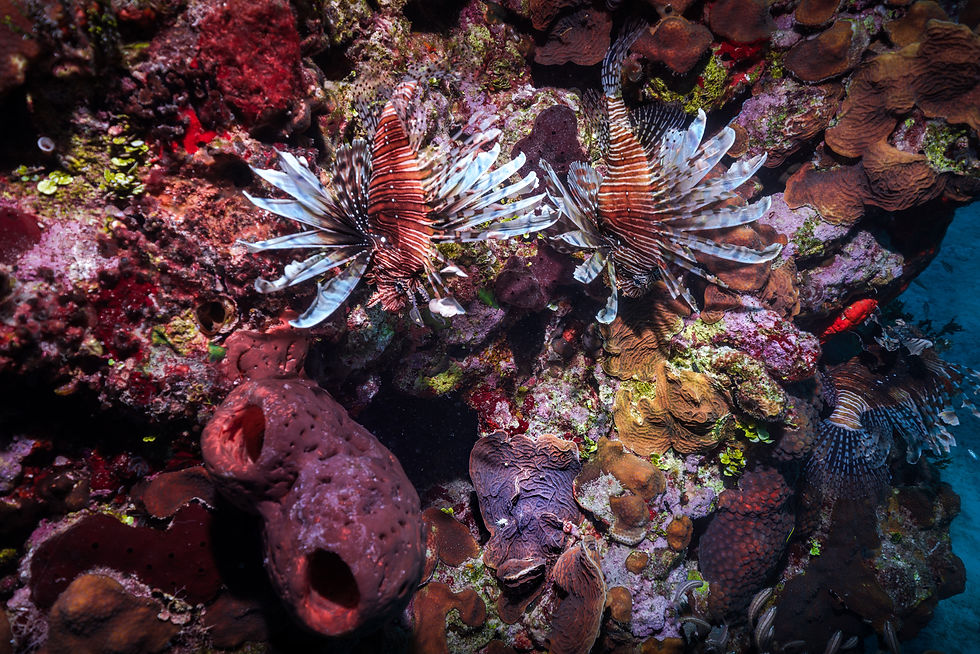
Lionfish did not evolve within Atlantic and Caribbean coral reef ecosystems, which ultimately led to several misalignments within the native food web; both predator recognition and prey recognition were not occurring. This means that the potential predators of the lionfish (groupers, eels, etc) did not recognize them as a prey source, and potential prey items did not see them as a threat. This evolutionary effect ultimately aided lionfish in outcompeting upper trophic level native species, and diminishing biomass of smaller juvenile fish.
These misalignments, often referred to as "trophic cascades", have had a devastating impact on marine ecosystems in the areas where lionfish have invaded. Effects of invasive lionfish have not only impacted local fish populations but have also negatively affected reef health. This decrease of small herbivorous fishes has led to an increase in macro algae coverage on coral reefs, which has reduced the settlement of new corals onto existing reefs. To mitigate the negative impacts of invasive lionfish on local underwater ecosystems, many dive shops, non-profits, and spearfishing enthusiasts have taken matters into their own hands by actively culling these destructive fish from the reefs.

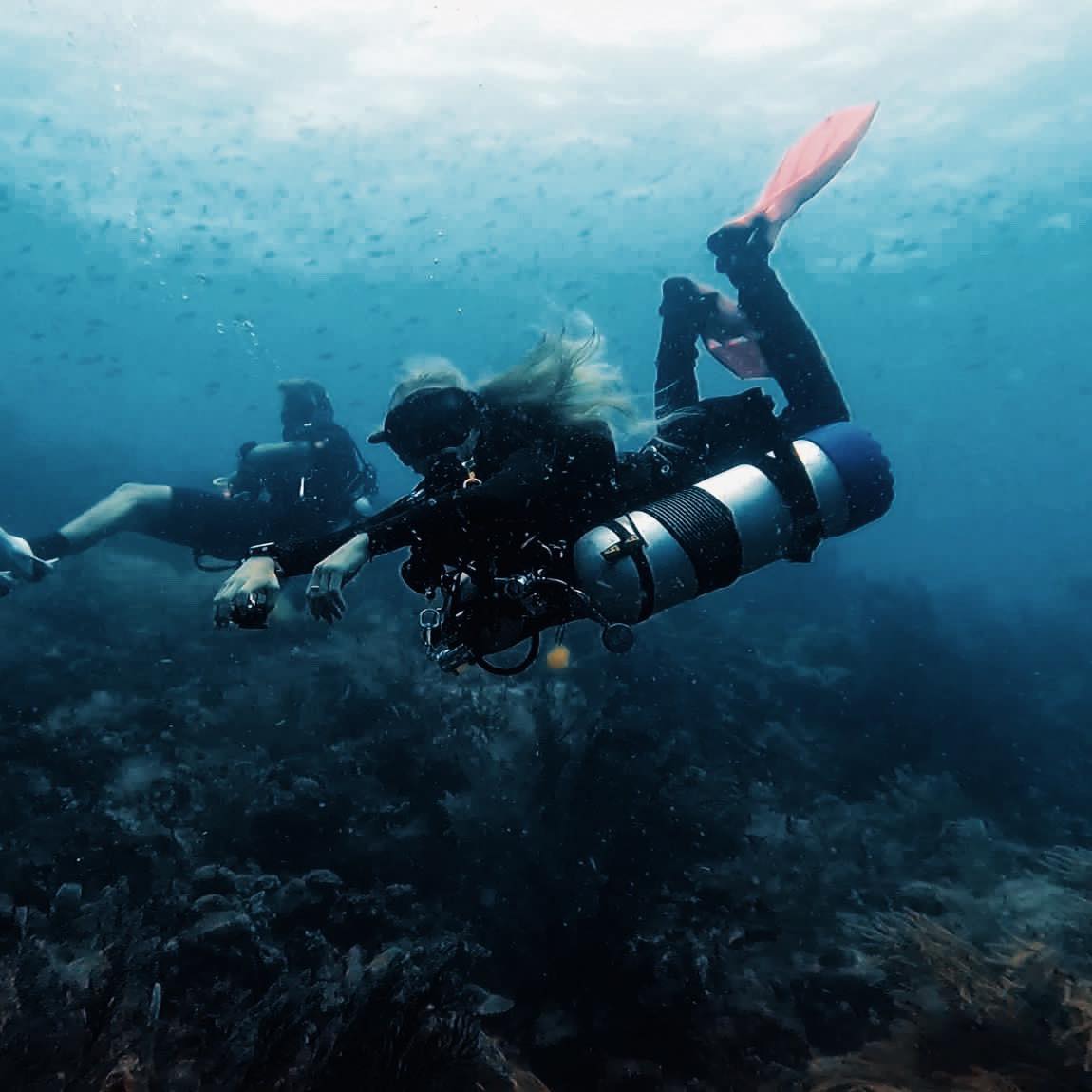
During our research trip to Grenada, we have had the amazing opportunity to participate in an invasive species control program with our partner organization HydroSoul and it's affiliated dive shop Aquanauts Grenada. Both HydroSoul and Aquanauts regularly patrol the local coral reef ecosystems for lionfish, and remove them whenever possible; this past week we had the chance to join them.

At daybreak, our dive team packed up our gear and headed down to the Aquanauts headquarters in True Blue Bay. From there it was a scenic 30-minute boat ride past white sand beaches and lush green mountains to our first dive site of the day, a
shipwreck named Tyrell Bay. Our team swiftly hopped off the boat and began descending down, hopeful that a successful hunt awaited us below.
Situated 20 meters (66ft) below the surface, Tyrell Bay hosts a diverse and thriving ecosystem, schools of creole wrasse cascaded down the wheelhouse and along the bow, brightly color sponges, corals, and tunicates encrusted her hull, making for a stunning backdrop for our lionfish hunt. Soon, we came upon our first targets, a Lionfish located under the port side hull, and quickly moved in for the kill.

As the day continued on we were able to remove 7 more lionfish from the waters of Grenada, not a bad haul considering the reefs we visited that day are regularly hunted by several local dive shops. Although removing 8 lionfish doesn't seem like a monumental feat, it actually has a larger impact then one might originally anticipate. Each invasive lionfish is estimated to consume approximately 5,000 reef fish. per year; our efforts on a singular day potentially saved over 40,000 fish. As we headed back to the dive shop, we chatted about our successful hunt and briefly lamented about the cleaning process that lay ahead.
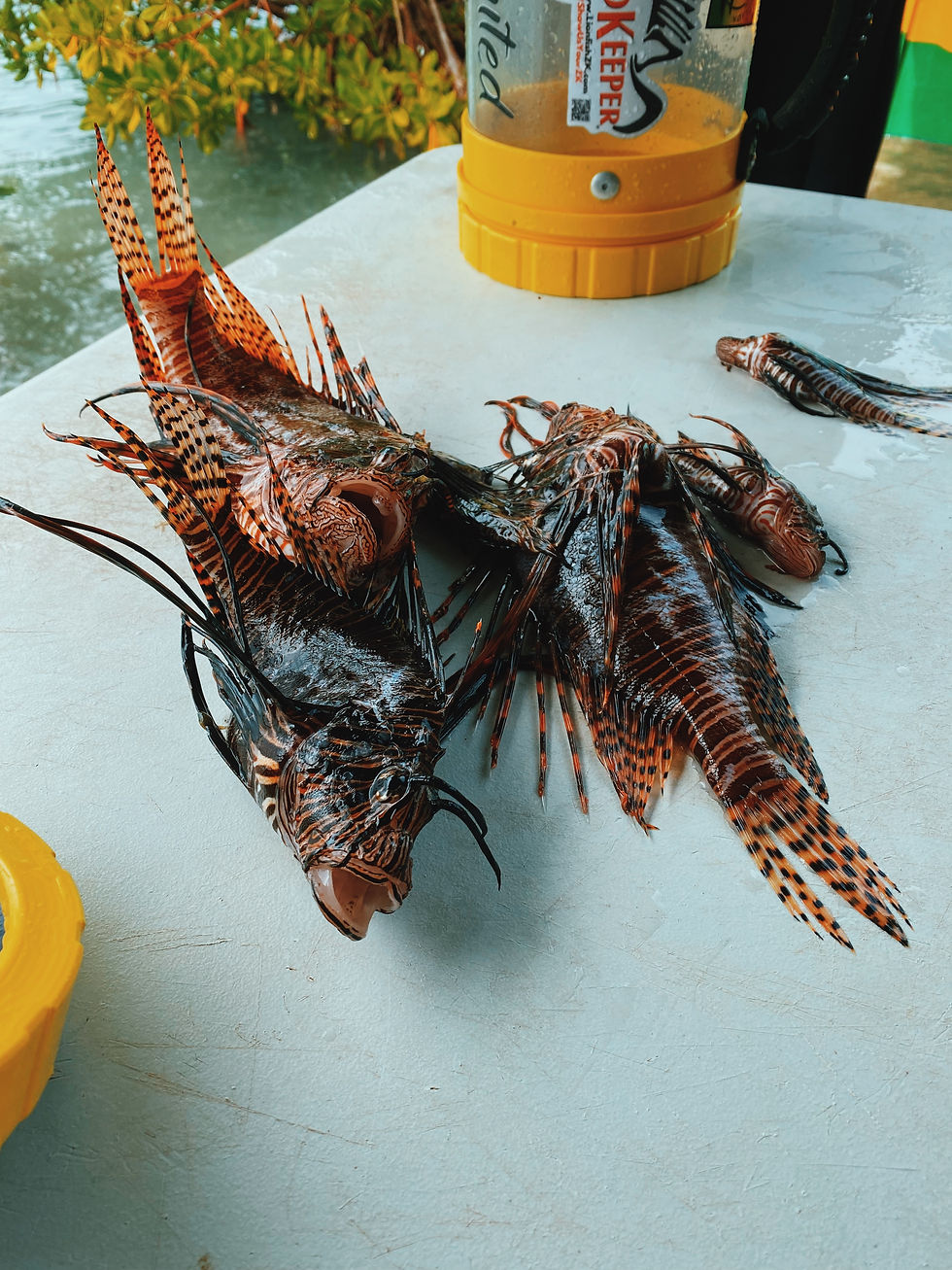
In addition to being a nuisance to local reef ecosystems, lionfish are also venomous, which makes them more difficult to clean and prepare than most other fish. Once we arrived back at the docks, we emptied our haul onto the filet table and began removing the venomous spines located on the dorsal, pelvic, and anal fins of each fish. With the spines out of the way, we could then begin removing the filets, which are a great addition to multiple dishes including tacos, pasta, ceviche, and sashimi, just to name a few. That evening we feasted on a huge bowl of lionfish ceviche, enjoying the ecologically friendly fruits of our labor.
Throughout our time in Grenada with Aquanauts we have continued our search along the reefs for these voracious predators, and thanks to the knowledge of the dive guides at Aquanauts, we have had successful hunts on each dive thus far.
Stay tuned for more updates!
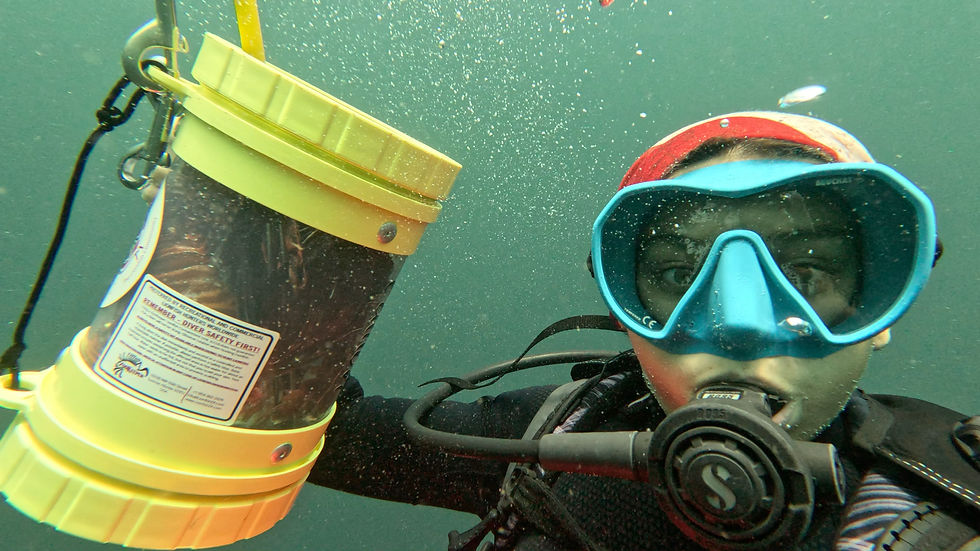
We know that not everyone has the opportunity to hunt invasive species, but there is more than one way to filet a fish.
You can help remove invasive lionfish from coral reef ecosystems by:
Participating in Local Lionfish Removal Efforts
Attending Local Lionfish Derby Events
Purchasing Lionfish where Available
Donating to organizations that cull lionfish
Want to try lionfish? Attend a Aquanauts Lionfish Bites and Beats Night at West Indies Brewing Co!
Want to learn more about the ecology and biology of Invasive Lionfish? Visit our Invasive Lionfish Page for more Info.

Comments