


.png)

CORAL REEFS
WHAT ARE CORAL REEFS?
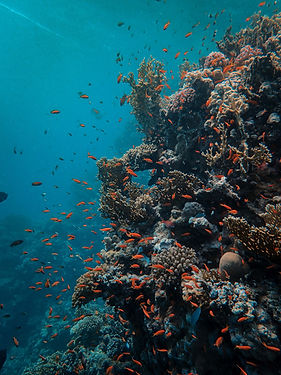
Coral reefs are some of the most diverse and important ecosystems on Earth, built over time by tiny animals called coral polyps.
These polyps create hard calcium carbonate skeletons that form the reef’s structure, growing into complex habitats that support thousands of other species.
Although reefs cover less than 1% of the ocean floor, they provide essential habitat for fish, crustaceans, mollusks, sea turtles, and countless other marine organisms. In many ways, coral reefs function like underwater cities; alive, growing, and constantly changing.
Why Coral Reefs Matter.
Beyond their beauty and biodiversity, coral reefs provide critical benefits to people. These ecosystems support fisheries that feed millions of people worldwide, protect coastlines by absorbing wave energy during storms, and contribute to tourism and local economies in coastal communities. One billion people around the world rely on the ecosystem services that coral reefs provide, which have been estimated to be worth over 11 trillion dollars annually. Healthy reefs also help maintain balance in the ocean by supporting food webs and nutrient cycling. When coral reefs thrive, entire marine ecosystems thrive alongside them.

Fueling Fisheries
Approximately 25% of all marine species spend at least one phase of their life cycle on coral reefs, making them vital for the fishing industry globally.

Protecting Coastlines
Coral reefs buffer shorelines against 97 percent of the energy from waves, storms, and floods, helping to prevent loss of life, property damage, and erosion.

Supporting Tourism
Globally, coral reefs generate an estimated $36 billion USD per year in tourism value, supporting millions of jobs across hotels, restaurants, guides, and local businesses

Why Coral Reefs Need Our Help.
Coral reefs are among the most biodiverse ecosystems on Earth, and they are experiencing rapid and unprecedented global decline.
Over the last several decades, many reefs have lost living coral cover and shifted toward less stable states dominated by algae and rubble. Mass coral bleaching events and other disturbances are becoming more frequent, leaving reefs less time to recover between stress events.
As coral cover declines, the ecological functions reefs provide are increasingly at risk. Without meaningful intervention at both global and local scales, coral reefs are expected to continue declining throughout this century.
50%
decline in coral reef cover since 1950
67%
decline in reef associated biodiversity since 1950
99%
projected decline
of coral reef cover
under 2°C warming
THREATS TO CORAL REEFS
Coral reef decline is driven by a combination of global climate stress and local human impacts that disrupt natural ocean conditions and weaken coral health and recovery.

Rising ocean temperatures caused greenhouse gas emissions lead to mass bleaching by disrupting the relationship between corals and their symbiotic algae. Repeated heat events continue to lead to widespread mortality
Warming Waters

Ocean Acidification
Due to the increase in concentration of CO2 in the atmosphere, the world's oceans are becoming more and more acidic. This trend of ocean acidification reduces the ability of stony corals to build skeletons, which ultimately slows reef growth and compromises structural strength.

Invasive Species
Introduction of non-native species can disrupt the delicate ecological balance of native food webs. These trophic disruptions often have negative effects on corals including increases in algae, which often smother reefs.

Poor Water Quality
Pollution, sedimentation, destructive coastal development, and overfishing reduce water quality and ecosystem balance, often fueling algal overgrowth and limiting reef recovery
How You Can Help


Daily Impacts
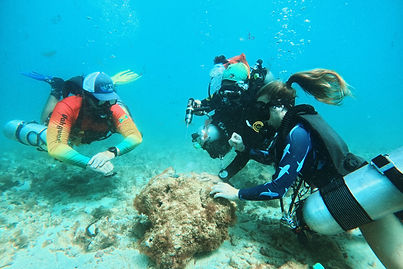
Little actions can make a big difference, learn more about how to change your daily habits in a way that supports ocean health.